Search This Blog

DXER Ham Radio DX News

The latest dx news/current propagation and more. Visit mike's Amateur Radio Page at www.qsl.net/swlham

Showing posts with label April 15. Show all posts

Sunday, April 15, 2018

Demonstrating the MFJ-1708SDR Automatic Relay Switch with an SDRplay and Icom IC7300

A few weeks ago we posted about the MFJ1708SDR automatic relay switch and how it can be used to combine an RX only SDR with a transmit capable radio. An automatic antenna relay switch is used to automatically ground the SDR’s antenna input whenever the TX capable radio transmits in order to protect the SDR’s front end from blowing up due to high TX power.

In this YouTube video Pete Sobye shows us the MFJ1708SDR working together with an Icom IC7300 HF radio and an SDRplay which is being used as a panadapter. For software Pete uses HDSDR and Omnirig which allows the PC to control the IC7300.

The post Demonstrating the MFJ-1708SDR Automatic Relay Switch with an SDRplay and Icom IC7300 appeared first on rtl-sdr.com.

from topfeedremix https://ift.tt/2HqueKo
via IFTTT

Ohio/Penn DX Bulletin No. 1360

SB DX @ WW < KB8NW $OPDX.1360
Ohio/Penn DX Bulletin No. 1360
The Ohio/Penn DX PacketCluster
DX Bulletin No. 1360
BID: $OPDX.1360
April 16, 2018
Editor Tedd Mirgliotta, KB8NW
Provided by BARF80.ORG (Cleveland, Ohio)
Written/Sent from Murfreesboro, TN
Thanks to the Northern Ohio Amateur Radio Society, Northern Ohio DX
Association, Ohio/Penn PacketCluster Network, AB5K & the AR TelNet Clusters
Network, NJ1Q & W1AW, N2DG, NG3K & ADXO, W3UR & The Daily DX, K8GI, K8LBT,
K8YSE, W8GEX & 60m DX News, CO3JK, DL1SBF, DL7UXG & The DX News Letter,
DxCoffee.com, DXNews.com, DX-World.Net, ES1CW, F5NQL, F6AJA & Les Nouvelles
DX, HP1AC, I1JQJ/IK1ADH & 425 DX News, I2MQP & DX Italia News, IK7JWY,
M0PCB, OE7SEL, OZ6OM & 50 MHz DX News, PY4WAS, Sixitalia Weekly, and
VA3RJ & ICPO for the following DX information.
DXCC COUNTRY/ENTITY REPORT: According to the AR-Cluster Network for the
week of Sunday, 8th/April, through Sunday, 15th/April there were 208
countries active. Countries available: 3A, 3B6, 3B8, 3B9, 3D2, 3V, 3W, 4J,
4L, 4O, 4S, 4U1I, 4X, 5A, 5B, 5H, 5R, 5T, 5V, 5W, 5X, 5Z, 6W, 6Y, 7X, 8P,
9A, 9G, 9H, 9J, 9K, 9L, 9M2, 9M6, 9N, 9Q, 9V, 9X, 9Y, A4, A5, A6, A7, A9,
AP, BV, BY, C3, C5, C9, CE, CE0Y, CE9, CM, CN, CP, CT, CT3, CU, CX, D4,
D6, DL, DU, E5/s, E7, EA, EA6, EA8, EA9, EI, EK, EL, EP, ER, ES, EU, EX,
EY, F, FG, FK, FM, FO, FP, FR, FY, G, GD, GI, GJ, GM, GU, GW, H4, HA, HB,
HB0, HC, HH, HI, HK, HK0/a, HL, HP, HR, HS, HV, HZ, I, IS, J3, J6, J7, JA,
JT, JW, JY, K, KG4, KH0, KH2, KH6, KL, KP2, KP4, LA, LU, LX, LY, LZ, OA,
OD, OE, OH, OH0, OK, OM, ON, OX, OY, OZ, P2, P4, PA, PJ2, PJ4, PJ5, PY,
PY0F, PZ, R1FJ, S0, S5, SM, SP, SU, SV, SV/a, SV5, SV9, T7, T8, TA, TF,
TG, TI, TK, TR, TT, TU, TZ, UA, UA2, UA9, UK, UN, UR, V3, V4, V5, V7, V8,
VE, VK, VP2E, VP8, VR, VU, XE, XT, XU, YB, YJ, YL, YO, YS, YU, YV, Z3, Z6,
ZA, ZB, ZD7, ZF, ZL, ZP, ZS
* PLEASE NOTE: The report “could” contain “Pirate/SLIM” operations or
  more likely a “BUSTED CALLSIGN”. As always, you never know – “Work
  First Worry Later”.
3B7A ST. BRANDON ISLAND DXPEDITION NEWS. By the time you read this,
teardown has begun and 6 team members have left the island. The 3B7A
should be going QRT on April 17th. It was reported on April 14th, they
had made +60,000 QSOs with only 8 operators for 9 days. QSL via F5CWU
(direct or by the Bureau),vClubLog’s OQRS or LoTW. For more information,
see:                    http://www.saintbrandondx.com
Support them from their Web site: http://www.saintbrandondx.com/how-to-help-us
Follow them on Facebook <https://www.facebook.com/SaintBrandonDX> and
3B9, RODRIGUES ISLAND. Members of the Association Réunionnaise des Radio
Amateurs (ARRA)[FR4KM] Radio Club will be active as 3B9RUN from Rodrigues
Island (AF-017) between May 11-16th. Operators mentioned are Jacky/FR4NP,
Bruno/FR4PF, Emile/FR4PM, Jean/FR5CB and Bernard/FR5FC. Activity will be
on 80-10 meters using SSB and FT8. Equipment will be 2x Icom 7000 and 1x
Kenwood TS480 with a 500w amp into a Hexbeam and a DX88 vertical. QSL via
EA7FTR, direct or ClubLog. See QRZ.com for updates.
6Y, JAMAICA. Chris, VO1IDX, will be active as 6Y5IDX from Negril, Jamaica
(NA-097), between April 29th and May 6th. Activity will be on 80-10 meters
using SSB and FT8. QSL via his home callsign.
7P, LESOTHO. Bernie, ZS4TX, will once again be active as 7P8Z from Maseru
(WW Loc. KG30vo) between April 27-28th. Activity will be on 2m EME.
Planned operations are from Moonrise time 1440Z [First 3 degrees blocked
by mountain range] on Friday the 27th until Moonset on Sunday 0340Z, 29th
of April 2018. QSL via LoTW.
9H, MALTA. Thomas, SV2CLJ, will be active as 9H3SV from the QTH of Savas,
9H1AE, at Sliema, Malta (EU-023), between May 24-31st. Activity will be
holiday style on 80-2 meters using CW, SSB, RTTY, PSK and FT8. QSL via
his home callsign direct.
9K, KUWAIT. Abdallah, 9K2GS, will be active as 9K2K during the CQWW WPX
CW Contest (May 26-27th) as a Single-Op/All-Band entry. QSL via EC5AC or
LoTW.
9X, RWANDA. Members of the Italian DX Team (IDT) are planning a DXpedition
to Rwanda sometime between late September-early October this year. Callsign
will be announced later, but they are seeking input for the needs for both
bands and modes. DXers can take the survey at:   http://www.i2ysb.com/idt
C8, MOZAMBIQUE. Members of the Lions DX Team will be active as C8T from
Bilene-Macia, Gaza, Mozambique, between May 2-15th. Operators mentioned
are Kurt/ON8KW (Team Leader), Roger/ON7TQ (Co-Leader), Bruno/CS7ABG (Co-
Leader), Paulo/CU2CO, Emil/DL8JJ, Ron/ON1DX, Philippe/ON4ACP, Marc/ON4AMX,
Erik/ON4CCV, Olivier/ON4EI, Herman/ON4QX, Ivo/ON5CD, Cis/ON6LY and Franky/
ON7RU. Activity will be on 160-6 meters using CW, SSB and RTTY.  They
will also operate on 60m and 2m EME. QSL via ON1DX. QSL via ON1DX. For
more details and update, see:   https://mozambique2018.wordpress.com
CO, CUBA. The members of Group CW of Cuba (Jav/CO3JK, Rey/CO6RD and
Oriol/CO8CY) will be active as CO3JK to celebrate the 93rd anniversary
of Radioaficionados’s International Union (IARU) between 0000-2359z,
on 40 meters CW, on April 18th. QSL via CO3JK.
CQMMDX CONTEST. The CQMM DX Contest, organized by the Juiz de Fora CW
Group <http://www.cwjf.com.br>, will be held on April 21-22nd.  For more
details, see:                http://www.cqmmdx.com.
DXCC NEWS. Sharon Taratula, ARRL Awards Manager, states, “The ET7L contact
still is not acceptable for DXCC credit.”
E5, SOUTH COOK ISLANDS. Bruce, WB7OTC, will be active as E51OTC from
Rarotonga Island (OC-013), Aitutaki Island (OC-083) and Atiu Island
(OC-083) between May 7-18th. Activity will be QRP on various HF bands.
QSL via his home callsign.
E5, SOUTH COOK ISLANDS. Bob, NC6Q, will be active as E51NCQ from Rarotonga
Island (OC-013) between May 13-25th. Activity will be on various HF bands
using CW, with 100 watts and wire antennas. QSL via his home callsign.
E6, NIUE. The Quake DXpeditioners are pleased at announce that they will
be activating Niue Island (E6) between October 6-16th. Callsign TBA. They
will also be entering in the Oceania DX Contests (SSB & CW legs). Operators
mentioned are Phil/ZL3PAH, Geoff/ZL3GA, Mark/ZL3AB and Paul/ZL4TT. QSL via
ZL3PAH.
FO, FRENCH POLYNESIA. Walter, HB9XBG, will be active as FO/HB9XBG from
Bora Bora Island (OC-067) between June 7-17th. Activity will be on 20
meters SSB. QSL via his home callsign.
FOC NEWS.  Iain, M0PCB, FOC Activity Coordinator, informs: In May 2018
the First Class CW Operators Club, FOC, will be celebrating its 80th
anniversary. Between May 1-31st, FOC members from around the world will
be active on the bands with CW with special callsigns, many of them
containing the number ‘80’ or an ‘FOC’ suffix. Points will be awarded
for working these special calls. The challenge is being run as a leader
board on ClubLog, and your ranking in the leader board determines the
award level you achieve. To see the full rules, a list of active stations
and how to claim the award, please see:    https://www.g4foc.org/foc80
GD6, ISLE OF MAN. Operators Billy/GM0OBX, Jonathan/MM0OKG, Adam/MM0KFX
and Ross/MM0OBT will be active as GD6NX from Scarlett Point, Isle of Man
(EU-116), during the RSGB IOTA Contest (July 28-29th) as a Multi-Op/
Island-DXpedition/High-Power entry. QSL via LoTW.
HB0, LIECHTENSTEIN (WWFF Op). Operators Marc/PD7YY, Marcel/PG8M and
Lars/PH0NO [(members of the YNOMY DX Group) will be active as HB0/PG8M
and HB0/PH0NO from several different WWFF nature reserves between May
12-13th. Activity will be on 80-2 meters using CW, SSB and possibly
some Digital modes. QSL via PD7YY. For more details, see:
IOTA NEWS…………..
  AF-065.  A team of 20 Moroccan operators (CN) will use the special
           callsign 5C5AF from Mogador Island between April 17-22nd.
  AS-047.  Operators Tak/JR1LZK and Mitsu/JE1HXZ will be active as home-
           call/6 from Kita Daito Island between April 27th and May 7th.
           Activity will be on 80-6 meters using CW, SSB, RTTY and FT8.
           QSL via their home callsigns, direct, by the Bureau, ClubLog
           and LoTW.
  EU-103.  Operatros Pete/M1PTR, Tom/M0DCG and Kieron/EI6KP/M5KJM will
           be active as EJ6KP from Great Saltee Island, weather permitting,
           between April 17-19th. Activity will be on 40/20 meters SSB.
           QSL via the Bureau.
  EU-120.  Eddie, GM0KLS, will be active as G0LKS from Holy Island during
           the RSGB IOTA Contest (July 28-29th) as a Single-Op/12-Hrs/
           High-Power entry. QSL via his home callsign.
  NA-071.  Operators Victor/HP1AVS, Henry/HP1CDW, Enrique/HP1ECA, Roberto/
           HP1MRA, Romel/HP8MAK and HP1JCC will be active as 3F6IC from
           Cebaco Island between May 4-5th. Activity will be on 80-10
           meters using SSB and the Digital modes.
  NA-155.  Members of the TI DX Group will be active as TE6DX from Uvita
           Island between June 7-11th. Operators mentioned are Charlie/
           TI2CDA, Carlos/TI2CC, Kamal/N3KS and possibly 2 or 3 more
           operators. Activity will be on 160-6 meters using CW, SSB,
           FT8, RTTY and FM Satellites. QSL via TI2CDA, ClubLog’s OQRS
           or LoTW.
  OC-015.  Reminder that Tony, 3D2AG, will be active as T2AR from Funafuti
           Atoll, Tuvalu, between April 14-21st. Activity will be on
           160-6 meters, including 60m, plus 2m meteor scatter. QSL via
           3D2AG .
  SA-090.  Operators Luis/YV5ENI, Esteban/YV5DTA and Jesus/YV5MI were
           active as YW6X from Piritu Islands (ARLHS VEN-016, WLOTA L-202)
           QSL via YV5ENI.
  PLEASE NOTE: Since the Webmasters of the new <www.iota-world.org> have
  decided NOT to post or dedicate a Web page to announce upcoming IOTA
  operations, PLEASE send your IOTA operations information to the OPDX
  and we will post it here in an upcoming bulletin……
KH1/KH7Z BAKER ISLAND DXPEDITION NEWS (Press Release, dated April 11th).
  The 2018 DXpedition to Baker Island is proud to announce the addition
of Neil King, VA7DX to our team.
  Neil was first licensed in 1979 as VE7CVM, attained his advanced certi-
fication in 1980 and acquired the call VA7DX in late 1999.
  An avid HF, VHF and UHF contester, Neil has also dabbled in meteor
scatter, EME, tropo and satellite operation.
  Neil has had the opportunity to visit and operate from 3DA0, 7P8, VU7,
TX5C, JT1, K5D, HK0, C9, A25, FT5ZM, 7Q7, A35, and TX5T.
  KH1 is the 6th most wanted entity. Our plans are to bring the KH1 entity
to as many operators, and countries as we can.
  As with any DXpedition to the really rare ones, this will be another
large budget operation. The operator team will contribute over 50% of
the expected budget of $400,000. You can help make this DXpedition happen
by visiting our website, and contributing today.
                   http://www.baker2018.net/pages/donate.html
  With two months to go before we board our ship in American Samoa, we
thank you in advance for your support.
                    The Baker Island 2018 Team
KH9, WAKE ISLAND (Update). Philip, N7NVK, now active as KH9/N7NVK,
reported on QRZ.com this past week 0n April 13th: “I am now on Wake Is.
I am working out the logistics to get on the air this coming weekend
(20 meters SSB) in the neighborhood of 14.225 split, listening up 5kc.
Saturday the 14th (USA) at 2200 UTC.  Hope the bands are favarable.”
OT70, BELGIUM (Special Event). Look for special event station OT70NOL to
be active on various bands using CW and SSB, between May 1-31st. Activity
is to celebrate the 70th anniversary of the UBA. A special QSL will be
available.
PROPAGATION FORECAST/REPORT (April 16-22nd)…….
 Apr/16th AN      Apr/19th  HN     Apr/21st  HN
 Apr/17th AN      Apr/20th  AN     Apr/22nd  HN
 Apr/18th AN
   SOLAR REFERENCE KEYS/INDEXES AND GEOMAGNETIC REFERENCE
   ======================================================
    NORMALITY               GEOMAG       K Values    Alpha
   —————–        ——       ——–    ——
   AN  – Above Normal       Quiet        K=0-1       0-7
   HN  – High Normal        Unsettled    K=2         8-15
   LN  – Low Normal         Active       K=3         16-29
   BN  – Below Normal       Minor Storm  K=4         30-49
   DIS – Disturbed          Major Storm  K=5         50-99
   VRY DIS – Very Disturbed Severe Storm K=6-9       100-400
  REALTIME BAND CONDITIONS WEB SITE <http://www.bandconditions.com>:
  The purpose of this experimental Web site is to provide 24-7-365 actual
  (REALTIME) band condition information to CW QRPp, QRPe and CW/SSB for
  Contesters interested in increasing their scores. It can also be of
  benefit to other Radio Amateurs to determine band conditions for Nets
  and casual QSO’s. This information is NOT based on any software pre-
  dictions or any kind of satellite based readings. It is based on a
  new Ionospheric sounding method called “HF Ionospheric Interferometry”
  which operates very similarly to the PolSAR system used by NASA.
  Also, check out the VOACAP predication Web page at:
                 http://www.voacap.com/prediction.html
  A daily HF radio wave propagation forecast can be found at:
      Also on Twitter: https://twitter.com/@GiellaW4hm
QSL INFO AND NEWS……………….
  QSL-INFO from DB0SDX by Lothar, DL1SBF <www.qslinfo.eu> [April 15th]
 ——————————————————————–
  9A/S52DG/P via S52DG     ER/DL7VBJ via DL7VBJ     R1CC via DJ1ND
  9H1XT via 9H1XT (d/L)    ES9C via ES5RY (d)       RJ1O via RZ1O & (L)
  9H3HI via EU4CK(B);DL7VFM (d) HA9HAF9A via HA5CBM SV8/SV1CEI via SV1CEI
  C7A via UA3DX            HC2AO via RC5A           T88UW via JH7IPR & (L)
  CR2EME via DL9MS (d)     HG8ARDF via HA8BE        UP0L via DL8KAC
  CR5VISO via CT1EIS       HH2AA via NR6M & (L)     UP57GC via UN0GWL
  CT8/DD5DD via OK8ZZ      HV0A via IK0FVC          V31GS via K9GS
  CT8/OK4MM via OK4MM      IB2RT via I2MYF          VD105A via VO1NAR
  CX5A via CX2ABC          IR9Z via IT9VCE          W4R via W4RKC & (L)
  EE8K via EA8AV           K5V via N2GG (d)         YB0/JA1PBV via JA1PBV
  EG1MOP via EA1AUM        LZ362ME via LZ1KCP       YB0/JQ1LCW via JQ1LCW
  EG5WRD via EG5WRD (d/L/e) OE100WMA via OE3WMA     YQ69MSCC via YO2MKI
  EI0NMMI via EI6AL        OE100XWI via OE7XWI (B)  YT100SF via YU1SRS
  EM915Q via UR6QS         OL9R via OK6RA (d)       ZB2RAF via G8FC
  EP7AHN via EP7AHN (e)    PJ5/AI5P via AI5P
  ER/DL7UCX via DL7UCX     R108M via RK3LC
  (e) eQSL only  (d) direct only   (B) Bureau only  (*-B) DX’s- Bureau
  (O) OQRS only  (C) ClubLog only  (L) LoTW only    (N) No QSL needed
  (I) No IRC     (P) PayPal
  LOGS ONLINE AT CLUBLOG.ORG THIS WEEK……
  https://clublog.org/logsearch/3B7A   (Log is now being updated)
  QSLS RECEIVED VIA LoTW: 3B9FR, 3W9CI, 5A1AL, 5B4AMM, 5T2AI, 6Y5SGD,
  9Y4DA, AH3C, CA3SOC, EA4GWU, EB3JT, F5LML, HA7XC, JA1DOT, JA8BNP, JE1GGI,
  JI1ANI, KG4USN, OE3EPW, ON8BB, OS8A, OT9A, OZ0MJ, PY2TTE, SU9IG, SV2DFK,
  UA0CW, VA7XW/VE2 (NA-038), VE3RCN, VE3TCV, VE9IQ, XE1/N4DMH, XX9B,
  ZL2IFB and ZP6ARO
  QSLS RECEIVED VIA MAIL: 3G9A/MM, 9M6AAC, A5A, HB0/GM4UYE, SV2ASP/a,
  TI5/N4YDU and V31MA
  QSLS RECEIVED VIA THE BUREAU: NONE REPORTED THIS WEEK!!!
VK9X, CHRISTMAS ISLAND. Operators Chris/G3SVL, Nigel/G3TXF, David/G3WGN,
Mike/G3WPH and Tony/G2NF (all 6Gs Group members) will be active as VK9XG
from Christmas Island between October 16-30th. QSL via G3TXF. Full logs
will be uploaded to LoTW during the operation. PLEASE NOTE: The callsign
VK9XG is being reissued: if you worked VK9XG in 2006 or earlier, please
QSL (direct only) to Charlie, W0YG, with 2.00 USDs and SAE.
Z6, KOSOVO. A group of Czech operators will be active as Z66D until
April 22nd. Activity will be on various HF bands using CW, SSB, RTTY
and FT8 with several stations active. Operators mentioned are Petr/OK1BOA,
Palo/OK1CRM, David/OK6DJ, Ruda/OK2ZA, Karel/OK2ZI and Ludek/OK2ZC. QSL
via OK6DJ, ClubLog’s OQRS or LoTW.
-=-=-=-=-=-=-=-=-=-=-=-=-=-=-=-=-=-=-=-=-=-=-=-=-=-=-=-=-=-=-=-=-=-=-=-
TO BE ADDED TO THE OPDX MAILING LIST — Click or send requests to:
OPDX WORLD-WIDE WEB HOME PAGE (provided by John, K8YSE):
                    http://www.papays.com/opdx.html
NOW ON TWITTER:     https://twitter.com/kb8nw_opdx
ALSO VISIT THE NORTHERN OHIO DX ASSOCIATION’S WEB PAGES AT:
                          http://www.nodxa.org/
-=-=-=-=-=-=-=-=-=-=-=-=-=-=-=-=-=-=-=-=-=-=-=-=-=-=-=-=-=-=-=-=-=-=-=-
* All excerpts and distribution of “The OPDX Bulletin” are granted as
  long as KB8NW/OPDX/BARF80 receives credit.
** To contribute DX info, please send via InterNet Mail to:
   <kb8nw@barf80.nshore.org> OR <kb8nw@arrl.net> OR <kb8nw@hotmail.com>
   Information can now be faxed to the following phone line at:
                           1-419-828-7791 (F A X only!)
/EXIT
-=-=-=-=-=-=-=-=-=-=-=-=-=-=-=-=-=-=-=-=-=-=-=-=-=-=-=-=-=-=-=-=-=-=-=-
Tedd Mirgliotta, KB8NW – E-mail addresses:
<kb8nw@barf80.nshore.org> <kb8nw@hotmail.com> <kb8nw@arrl.net>
Editor of the Ohio/Penn DX Bulletin (OPDX – DXer’s Tool of Excellence)
President of the “Northern Ohio DX Association” (NODXA)
DX Chairman for the “Northern Ohio Amateur Radio Society
ARRL Assistant Director of the Great Lakes Division
Sysop of the “Basic Amateur Radio Frequency BBS” (BARF80.ORG)
______________________________________________________________
DX mailing list
This list hosted by: http://www.qsl.net

Please help support

YN4RRC – Big Corn Island, NA-013 – Nicaragua

Russian Robinson Club members Yuri RM0F, Sergey R4WAA, Sergey RZ3FW, Yuri N3QQ and Elena RC5A plan to be active from Big Corn Island, NA-013 Nicaragua during November 26 to December 6, 2018. QRV on 160-10m, CW/SSB. Callsigns to be used: H7/RM0F, H7/R4WAA, YN4RRC, H7/RC5A

from topfeedremix https://ift.tt/2HmO1ua
via IFTTT

VK9X/N1YC & VK9X/PE7T – Christmas Island

James, 9V1YC and Wilbert, PE7T are currently active from Christmas Island as VK9X/N1YC & VK9X/PE7T. QRV on HF, CW. VK9X/N1YC via W5UE VK9X/PE7T via LoTW

from topfeedremix https://ift.tt/2vgoJcm
via IFTTT

[UPDATE] Z60A – Kosovo

APRIL 15 — Following the LoTW upload of April 1st, the first Kosovo Z60A QSL card arrived in the U.S. during the past week to 92-year old Frank, K4BVQ, allowing him to reach the DXCC sticker #385. Former INDEXA president Gary Dixon, K4MQG made a special personal delivery, delighting Frank, a serious DXer and supporter […]

from topfeedremix https://ift.tt/2DyrE3X
via IFTTT

5W0GC & YJ0GC – Samoa & Vanuatu

During the last few days, Stan LZ1GC received his licenses for upcoming expeditions to Samoa (5W0GC) & Vanuatu (YJ0GC). Flight tickets and accommodation is already reserved. Website

from topfeedremix https://ift.tt/2ENGTld
via IFTTT

A full review of the C. Crane CCRadio-EP Pro AM/FM portable radio

Without a doubt, C. Crane Company has become an established name in our radio community as a retailer and manufacturer that focuses on the world of broadcast listening. The company’s ads, website, and blog all promote broadcast listening as a viable and important part of our evolving media landscape. Their radio products are all designed with broadcast listening in mind.

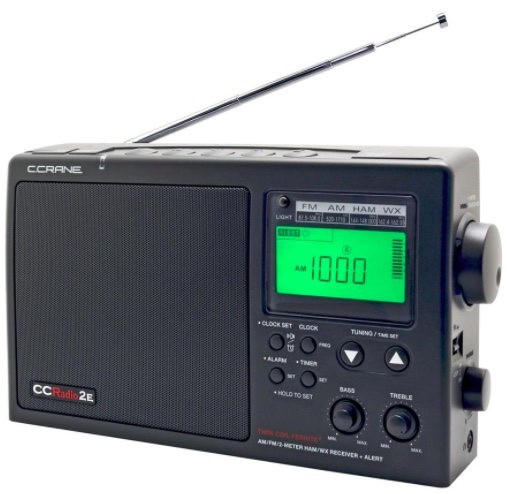
The C. Crane CCRadio 2E

Currently the company manufactures one of the most capable AM broadcast receivers on the market: the CCRadio-2E.

The CCRadio-2E, however, is a pricey portable at $170 US, perhaps overkill for the casual broadcast listener.

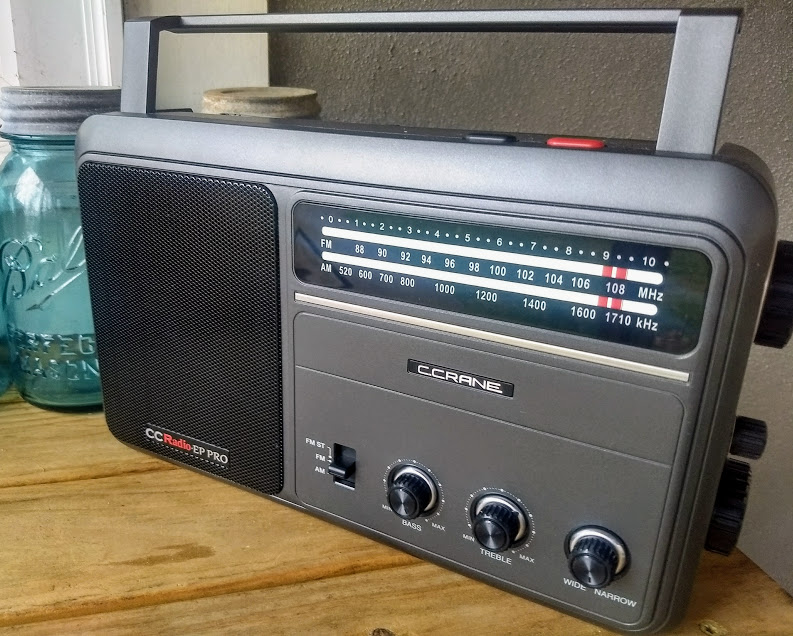
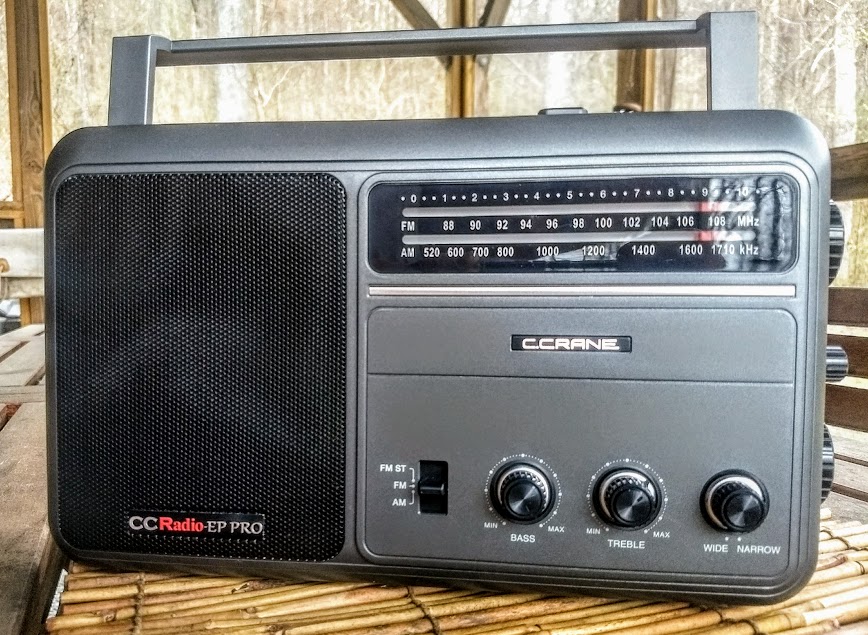
So, for those seeking a simpler broadcast receiver, C. Crane later developed the original CCRadio-EP, a bare-bones, fully analog AM/FM radio with a large backlit slide rule dial, designed for the listener who wants to “go old school” in their receiving.

The original CCRadio-EP also attracted mediumwave/AM broadcast radio listeners because it had fairly impressive performance characteristics supported by C. Crane’s patented Twin Coil Ferrite AM antenna. In many ways, the original CCRadio-EP was somewhat reminiscent of the GE Superadio.

Yet while the original CCRadio-EP has––according to C. Crane––been a popular product, because certain vital EP components are now becoming obsolete, the company has been forced to redesign it;  hence the new CCRadio-EP Pro.

The CCRadio-EP Pro: A different animal

Let’s be clear, though: unlike its predecessor, the CCRadio-EP Pro is no longer a true analog set.

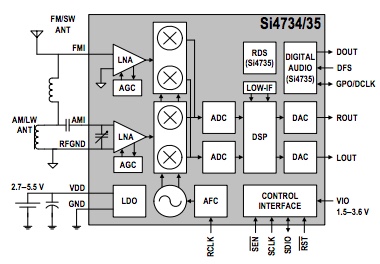
Despite external similarities, internally this radio and its predecessor are very different receivers. Inside, the EP Pro is based on the Silicon LabsSI4734 DSP chip. Perhaps it goes without saying, but I consider the move to a chip a significant design change.

In other words, much like the Degen DE321, the Degen DE32, the Tecsun R-2010D, the Kchibo KK9803 and the ShouYu SY-X5 (which I review in a shoot-out here), the CC-Radio EP Pro is a mechanically-tuned DSP receiver.

Crane kindly sent me a review sample of the new CCRadio-EP Pro. It’s important to note that the review unit came from a strictly limited first production run; the actual consumer rig’s first major production run is still a few weeks away.  Thus this radio is not yet shipping.

I’ve had the CCRadio-EP Pro for a few weeks now, during which time I’ve given it a thorough evaluation. So, let’s take a close look at the CCRadio-EP Pro––first, in terms of performance.

AM Performance

Let’s face it:  if you’re a radio enthusiast and reading this review, you’re likely mainly concerned with the EP Pro’s performance on the AM broadcast band. Personally speaking, that’s true for me, too.

The CCRadio-EP Pro (left) and Tecsun PL-660 (right).

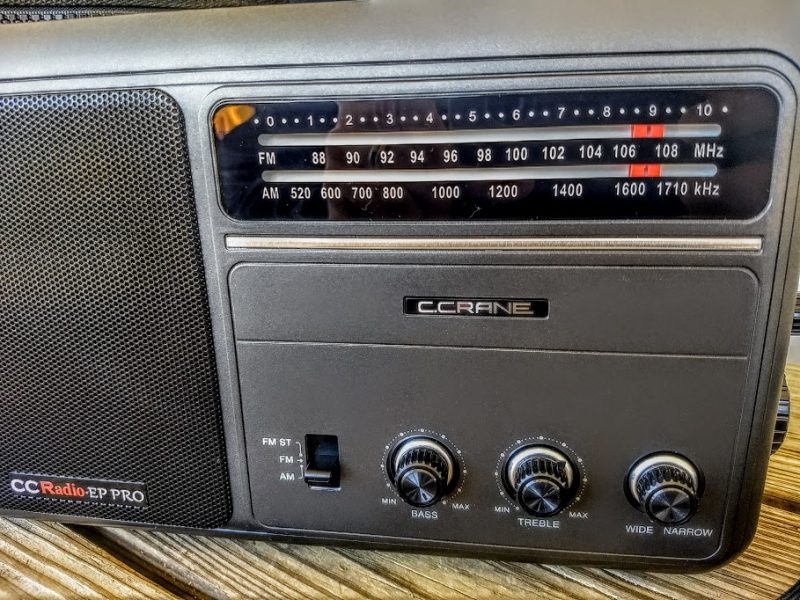
Over the years of reviewing portable receivers of all stripes, I’ve learned that nothing beats a radio specifically designed for AM broadcast band performance. Without a doubt, C. Crane intends that the CCRadio-EP Pro be one of these radios. Indeed, in many ways, it’s an ideal set for broadcast listening, because it sports:

  • C. Crane’s Twin Coil Ferrite AM antenna
  • A large speaker
  • Wide/Narrow bandwidth switch
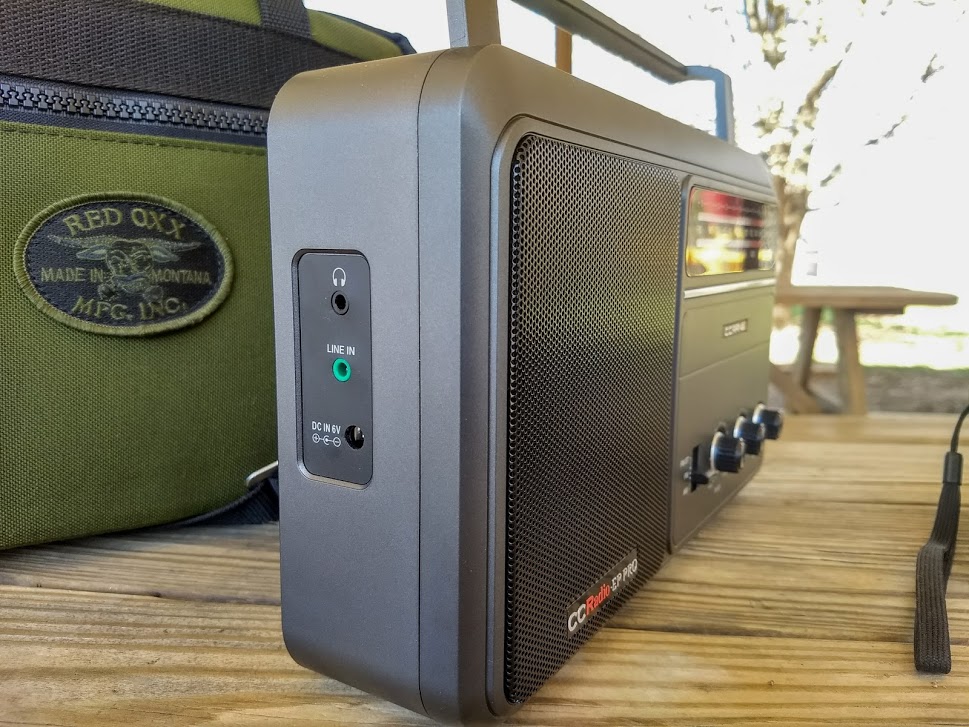
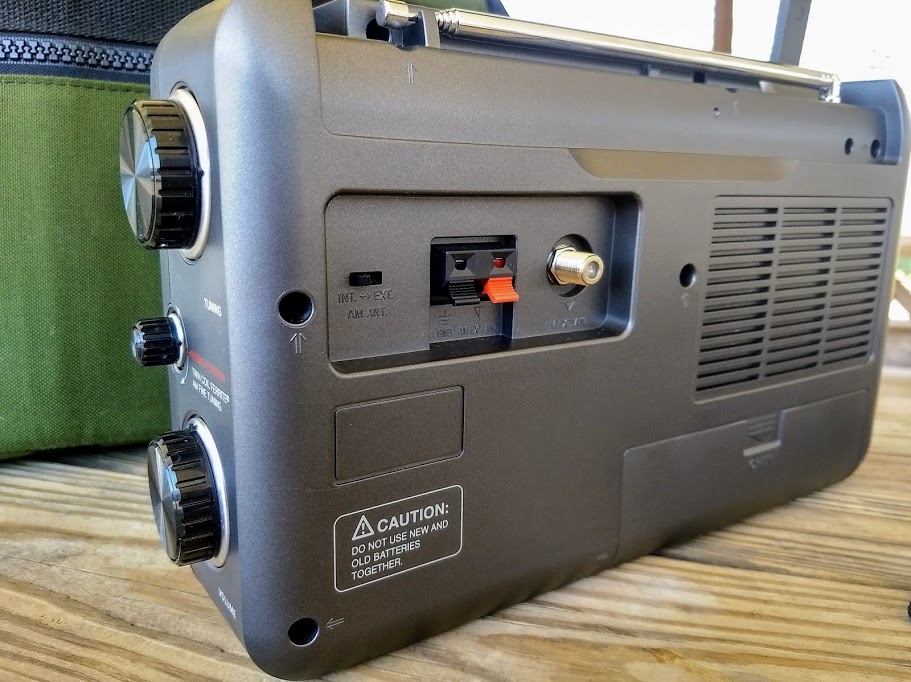
  • Dedicated external antenna connections

Although beefy internal AM antennas, large speakers, and external antenna connections were relatively common in the 1970s and 80s, these are rare features among modern AM/FM portable radios. The fact is, radios with superb AM broadcast performance are becoming a rather rare breed.

External antenna connections

In other words, the CCRadio-EP Pro has many design features that position it to be a formidable AM broadcast band receiver.

So, then, how does it perform? Well…that’s complicated to explain. The CCRadio-EP Pro has some positives, but also a notable amount of negatives.

Let’s start with the good news.

Positive: AM Sensitivity

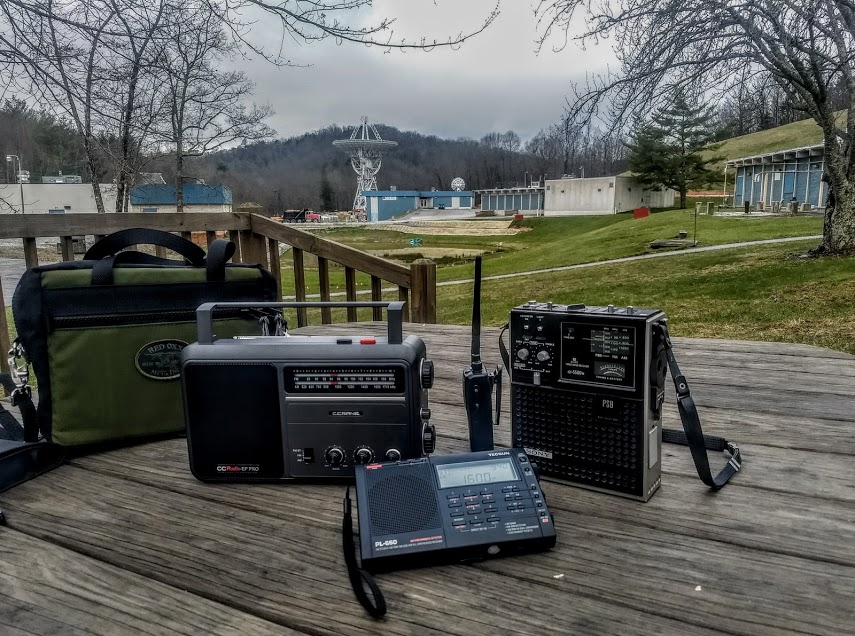
Comparing the CCRadio-EP Pro (left) with the Sony ICF-5500W (right) and the Tecsun PL-660 (middle) at the Pisgah Astronomical Research Institute.

The CCRadio-EP Pro is quite sensitive on the AM broadcast band. When I’ve compared it with a number of shortwave portables I own, it almost always outperforms them on frequency. When my Tecsun PL-660––one of the most sensitive mediumwave receivers among my shortwave portables––is tuned to a marginal signal, it sounds about half as sensitive as the CCRadio-EP Pro.

Check out the following comparison videos:

Click here to view on YouTube.

Click here to view on YouTube.

Click here to view on YouTube.

Click here to view on YouTube.

The noise floor is fairly low while the audio is robust and room-filling via the EP Pro’s front-facing speaker.

Positive: No drifting

As I’ve said above, unlike the original (analog) CCRadio-EP, the EP Pro is a mechanically-tuned DSP radio. In all of my testing, I never noted a time that the radio drifted off frequency.

Positive: Nulling

Crane’s internal Twin Coil Ferrite AM antenna affords the listener excellent gain and nulling capabilities. In fact, I find the nulling quite sharp, a major positive for this listener.

Positive: Fine tuning control

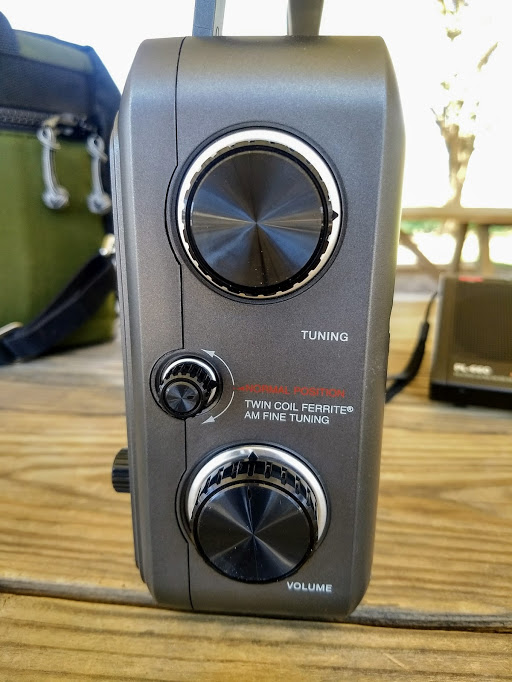
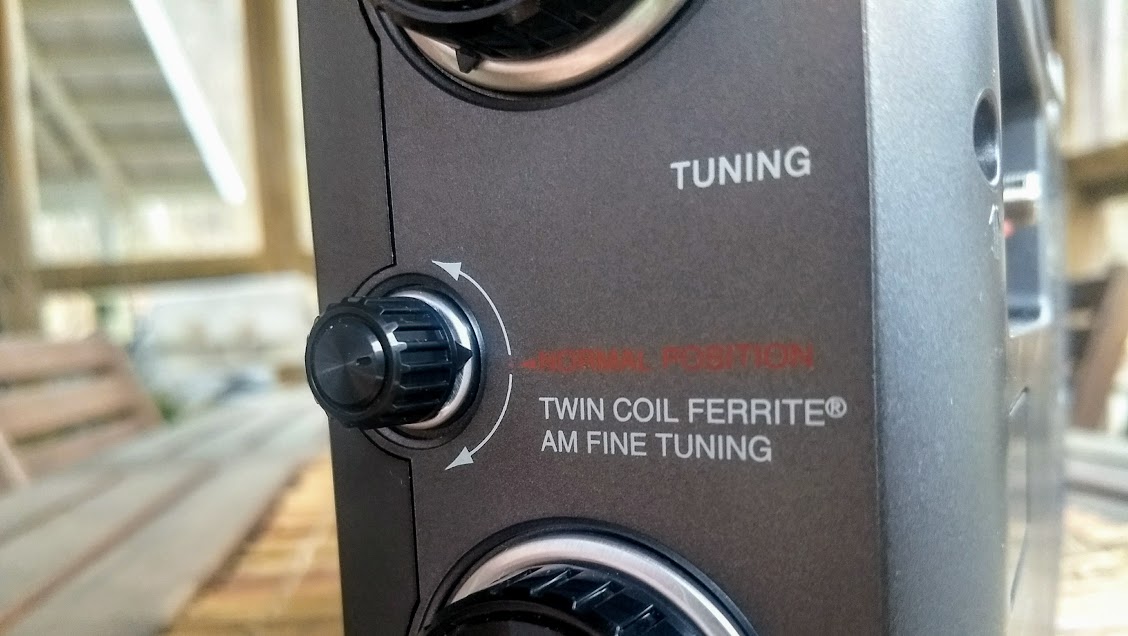
On the right side of the CCRadio-EP Pro you’ll find a large tuning knob (top), the antenna trimmer (middle), and large volume knob (bottom)

Like the original EP, the EP Pro has a Twin Coil Antenna Fine Tuning adjustment.

This feature can help make small adjustments to received station to peak reception. This fine tune control is actually trimming the twin coil ferrite bar.

Positive: Wide/Narrow filter

The EP Pro does have a Wide/Narrow filter selection which essentially helps widen or narrow received audio. Note that this has no meaningful impact on the imaging mentioned below.

Altogether, this about sums up the CCR-EP’s positive performance capabilities on the AM broadcast band.


Now let’s look at the CCR-EP’s negatives, some of which are, unfortunately, significant.

Negative: Muting between frequencies

The original CCRadio-EP revives the joy of a purely analog radio set.  When you tune up/down the bands, there’s a fluidity to the whole process. While the interface is simple, analog tuning allows your ears to pick up on the nuances––the rise and fall of stations both strong and weak as you travel across the dial.

As we mentioned earlier, mechanically-tuned DSP radios, like the new CCRadio-EP Pro, may look like analog sets, but inside, they’re entirely digital. And one drawback to all of the mechanically-tuned DSP radios I’ve tested so far is a tendency to mute between frequencies. With each 10 kHz frequency step, you’ll hear a short audio mute. If you tune across the dial quickly, audio mutes until you land on a frequency. Here’s a video demonstrating the effect:

Click here to view on YouTube.

Needless to say, muting makes band scanning a more fatiguing process. It’s really a shame this affects the AM band. I hope that C. Crane engineers can minimize this issue in future production runs, but I understand much of this is a characteristic/limitation of this particular DSP chip.

Negative: Images/Selectivity

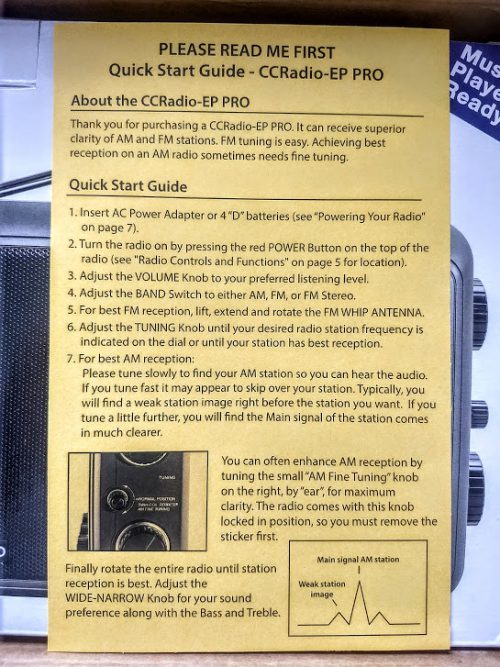
Crane actually includes a note about weak images which you might find below and/or above your target signal. Weak images are an unfortunate reality of the CCRadio-EP Pro; they’re prevalent on both AM and FM.

Here’s how you’ll experience the images by way of example: let’s say you’re tuning to a strong local AM station on 630 kHz, noting that the EP Pro has 10 kHz tuning increments. As you tune to 630 kHz, you’ll hear the station on 620 kHz, though it won’t be as strong as it is on 630 kHz. Then if you tune to 640 kHz, you’ll likely hear a weaker image of the station there, as well. In my experience, images are present on both sides of the target station if the station is strong. If it’s a weak station, you might only hear it, say, 10 kHz lower but not above (or vise versa).

The CCRadio-EP Pro is powered by four D Cells.

As you might imagine, this poses a problem for the weak signal AM broadcast band DXer. Let’s say you’re trying to snag an elusive DX station on 640 kHz; although the EP Pro might have the sensitivity required to grab that station, it’s simply not selective enough (if selective is indeed the right word) to reject the local station on 630 kHz, thus your weak DX will have local competition.

This, more than any other negative, takes the EP Pro out of the realm of the mediumwave DXer.

Negative: Inaccurate dial

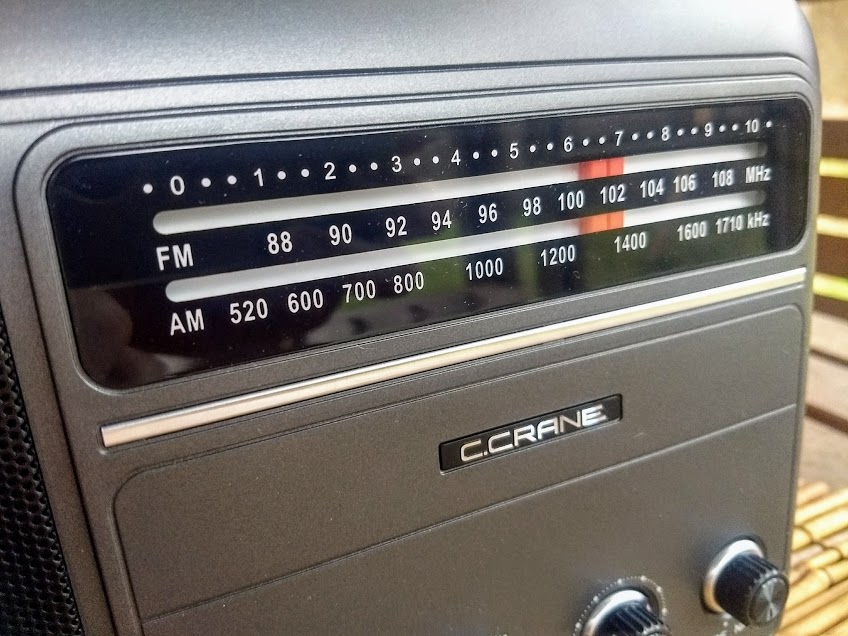
I’ve also discovered that, on my unit, the top half of the AM dial is inaccurate. I estimate that the slide rule dial is off by about 40-50 kHz at the top end of the band. It’s much more accurate below 1,200 kHz, however.

Here is a few photo of the CCRadio-EP Pro tuned to 1600 kHz:

I hope C. Crane can address this in future iterations of the EP Pro. While I don’t expect slide rule dials to be extremely accurate, there nonetheless needs to be some reliability.

Note: C. Crane engineering is aware of this problem and even attempting to implement a fix on the first production run units. I will follow up when I learn more.

Negative Audio “pop” with power on

As you might have heard in the band scanning video above, any time you turn on the CCRadio-EP Pro, you’ll hear an audio “pop.” This is happening when power is applied to the audio amplifier. The pop is not soft, but fairly audible, and is present even if you turn the volume down all the way. The audio pop is prevalent via both the internal speaker and when using headphones. Fortunately, it’s much less pronounced via headphones.  While not a major negative, I find it a bit annoying, and don’t doubt that other listeners will, too.

Note: C. Crane engineering tell me that they’ve minimized the audio pop since making the limited first production run, thus the first full production run should be improved.

Negative: AM frequency steps currently limited to 10 kHz

My initial production run EP Pro is limited to 10 kHz frequency steps. This radio is primarily marketed to North America where 10 kHz increments are standard. Of course, if you’re trying to use the EP Pro to snag Transatlantic or Transpacific DX, you’ll miss the ability to tune between those broad 10 kHz steps. But, again, due to the imaging mention above, I think the CCRadio-EP Pro is simply not suited for DXing.

Note: C. Crane engineering has informed me that future production runs of the CCRadio-EP Pro may have a 10/9 kHz switch, thus eliminating this negative. If you’re reading this review a few months after time of posting––crossed fingers––this may already be resolved.

FM Performance

If you’re looking for a simple AM/FM radio, and plan to spend most of your time on the FM band, you’ll like the CCRadio-EP Pro.

Positive: Audio

FM audio is very good on the CCRadio-EP Pro. I think it would be safe to say that it’s superior to most other receivers currently on the market in its $85 price range. Audio is room-filling and has good characteristics with dedicated adjustments for Bass and Treble. FM audio is reminiscent of 1970s-era solid-state receivers like the GE Superadio (a big positive, in my book). The bass is not very deep and resonant, nor the treble super-crisp, but the sound overall is very pleasant to the ear.

Positive: Sensitivity

The EP Pro is a sensitive FM receiver. It received all of my benchmark local and distant FM stations.

Positive: No drifting

As with AM, the EP Pro does not drift off frequency (again, this is actually a DSP radio).

The FM band is less affected by some of the negatives that impact AM broadcast band listening:

Negative: Inaccurate dial

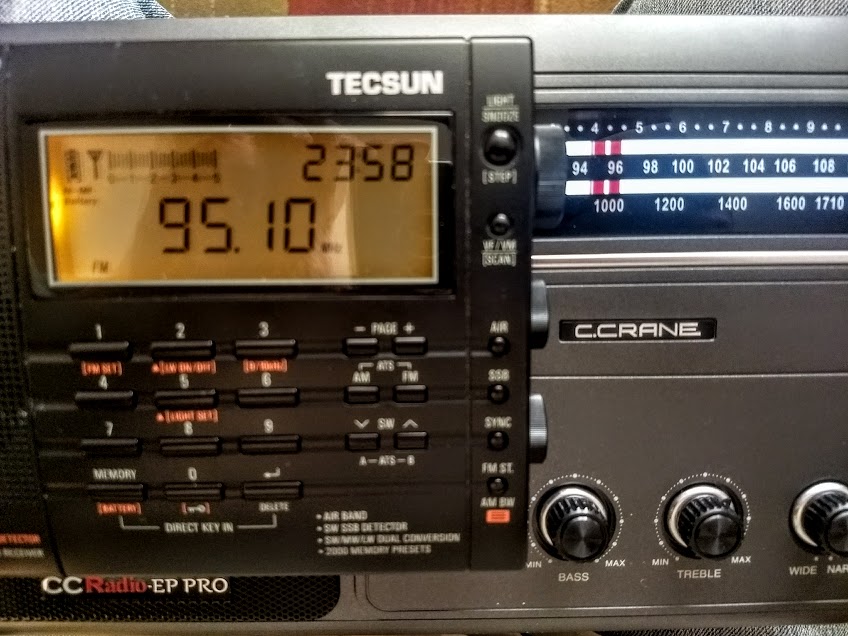
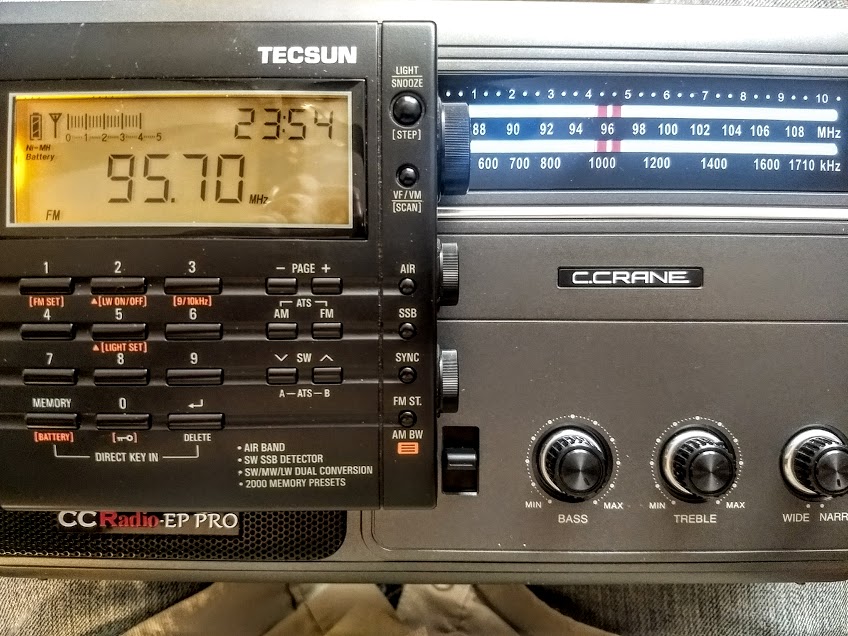
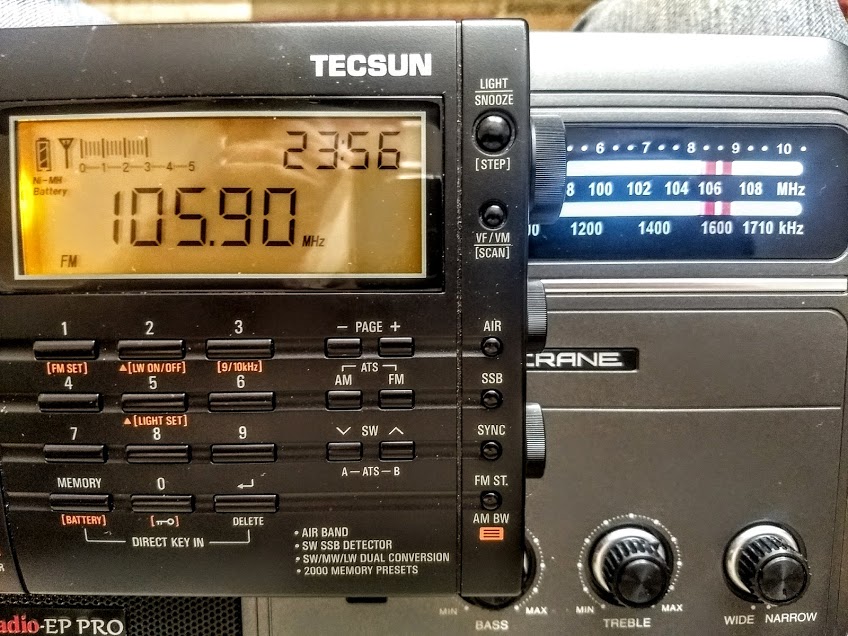
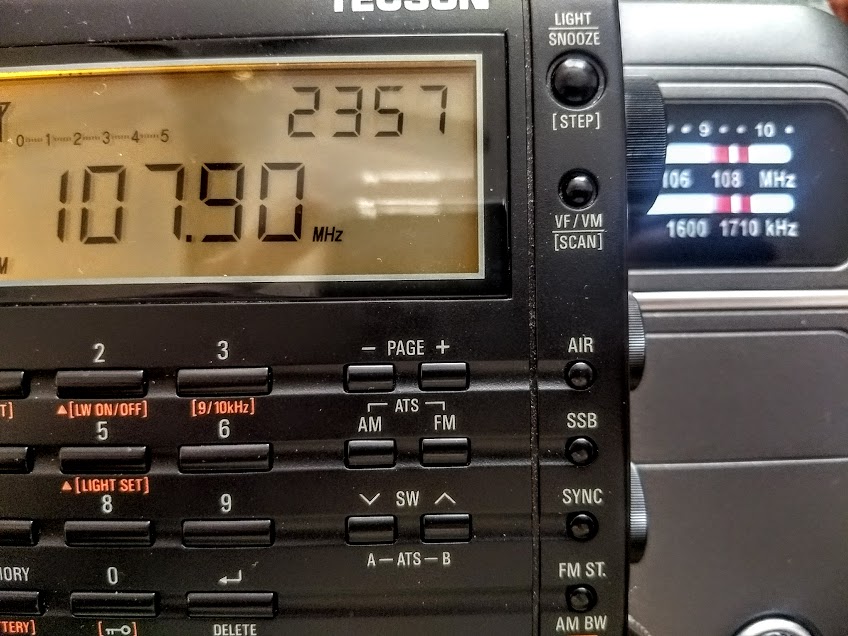
As with the AM dial, FM frequency markings are slightly off. I measured the entire FM band and found that the upper half of the dial (above 102 MHz) seemed to deviate the most. See images below comparing the Tecsun PL-660 and CCRadio-EP Pro tuned to the same FM frequencies:

Here are a few examples of the CCRadio-EP Pro and Tecsun PL-660 tuned to the same frequencies:

Note: As mentioned above, C. Crane is trying to implement a fix for this in future production runs.

Negative: Imaging

As with the AM band, you will find imaging on the FM band. This bothers me less on the FM band, but I live in an area where the FM dial isn’t incredibly crowded. If you live in an urban market with stations packed into the dial, then the imaging concern will probably make the experience of listening to a weak station adjacent to a strong station quite unpleasant.

What about muting between frequencies? While you can hear frequency steps on the FM band, there is little to no muting between frequencies. It almost feels more like an analog radio.

Click here to view on YouTube.

Funny, but the weak signal images around a strong FM frequency actually help contribute to an analog-like experience during band scanning, as stations seem to rise and fall as you tune.

There is another factor that I don’t really consider a positive, but is worth noting.  The EP Pro is one of the best mechanically-tuned DSP receivers to use on the FM band because the slide rule dial is wide––there’s a larger space for the needle to travel. FM band scanning would be a pretty pleasant experience if only the dial markings were more accurate.

Summary

Every radio has its pros and cons. When I begin a review of a radio, I take notes from the very beginning so that I don’t forget some of my initial impressions. Here is the list I formed over the time I’ve spent evaluating the C. Crane CCRadio-EP Pro.

Pros:

  • Excellent AM sensitivity
  • Good audio via internal speaker
  • Internal Twin Coil Ferrite AM antenna provides excellent gain and nulling
  • Excellent dial backlighting
  • External AM/FM antenna connections
  • Quiet (included) power supply
  • Low noise floor
  • Dial backlighting

Cons:

  • Imagining on both AM and FM
  • Muting between frequencies on AM
  • Pop in audio when unit is turned on, regardless of default volume level
  • Dial markings inaccurate
  • AM frequency steps currently fixed too broadly at 10 kHz (though future units may have a 9/10 kHz toggle)

Conclusion

My conclusion is that the CCradio-EP Pro is simply not an enthusiasts’ radio.

If you read the list of negatives in the AM performance section of this review, you’ll know why I simply can’t recommend it…at least not yet. If C. Crane could minimize AM muting, improve imaging and fix the frequency accuracy, this radio may prove more promising. But at this point, the limited production run CCRadio-EP Pro lacks the level of refinement that I’ve come to expect from a C. Crane radio.

For what it’s worth, I have been in close contact with C. Crane regarding these issues; the company is taking them to heart and even looking to implement some fixes/adjustments prior to their full production run. As these issues are resolved, I’ll amend this review.

The lack of refinements is somewhat disheartening. Otherwise, the CCR-EP Pro would be a great mediumwave DXing machine. When on frequency, it’s quite sensitive and stable! Perhaps some mediumwave DXers could overlook the negatives above to take advantage of this.  I would not, however. I’d soon find the problems frustrating and turn to other receivers in my arsenal. Sensitivity is important, but personally I would sacrifice sensitivity to have an overall better tuning and listening experience.

On the other hand––as C.Crane makes a point of stating––the CC-Radio EP Pro was designed around the needs of Bob Crane’s mother: so is essentially an effective radio for casual listening that’s utterly simple to use.  In this respect, at least, the EP Pro is a success.

The EP Pro has no multi-function buttons, no menus, and no memories. The knobs and buttons are tactile and obvious. The backlit dial is also a nice touch; I love it. The EP Pro is old school design around a modern DSP chip and, in terms of audio, a hat tip to classic solid state analog radios from the 1970s and 80s.

The casual listener––especially those who use radio to primarily listen to their one favorite station––will enjoy the EP Pro. For example, I have an older friend who’s in the process of replacing his bedside radio of 30+ years.  He wants a set he can tune to his staple AM broadcast station (which is not a super-easy catch) and leave it on frequency––essentially, he wants a “set it and forget it” radio. I think the EP Pro will work well for this application.

But for radio enthusiasts––like most of you wonderful people who read the SWLing Post––I would pass on the EP Pro and consider a more capable mediumwave radio instead like the original CCRadio-EP, the CC-Radio 2E, or a vintage solid state set like the GE Superadio, Sony-5500W, or the venerable Panasonic RF-2200.

Click here to view the CCRadio-EP Pro at C. Crane Company.

from topfeedremix https://ift.tt/2qyCrlU
via IFTTT